The best heart rate monitors make it easier to train at the right intensity, track progress, and understand how your body responds to exercise. This roundup compares chest straps, armbands, ECG devices, and smartwatch-style options.
We focused on measurement method, connectivity, comfort, water resistance, battery life, app compatibility, and the features that matter most for everyday training.
Best 10 Heart Rate Monitors Picks for 2026
Most Accurate Chest Strap

- Highly accurate heart rate measurement
- Bluetooth, ANT+, and 5 kHz connectivity
- Waterproof with up to 400 hours of battery life
Best For: Athletes who prioritize precision and broad compatibility
Best for Garmin Training Data

- Real-time heart rate and HRV data
- Records workouts without a watch
- Adds running dynamics and swim-data support
Best For: Garmin athletes who want detailed training metrics
Most Comfortable Armband

- Soft, breathable armband design
- Pairs with up to three Bluetooth devices
- Automatic wear detection and 38-hour operation
Best For: Workout users who prefer an armband over a chest strap
Best Long-Battery Garmin Option

- Up to one year of replaceable-battery life
- Tracks heart rate and HRV in real time
- 3 ATM water rating and washable strap
Best For: Garmin users who want low-maintenance training data
Best Armband Heart Rate Monitor

- Wrist-free optical tracking
- ANT+ and dual Bluetooth connectivity
- Arm, clothing, or goggle-clip placement
Best For: Comfort-focused workout tracking
Best Personal EKG Heart Monitor

- Six-lead EKG in about 30 seconds
- Four FDA-cleared rhythm determinations
- No membership required for recordings
Best For: On-demand rhythm checks and sharing results
Best Chest Strap Heart Rate Monitor
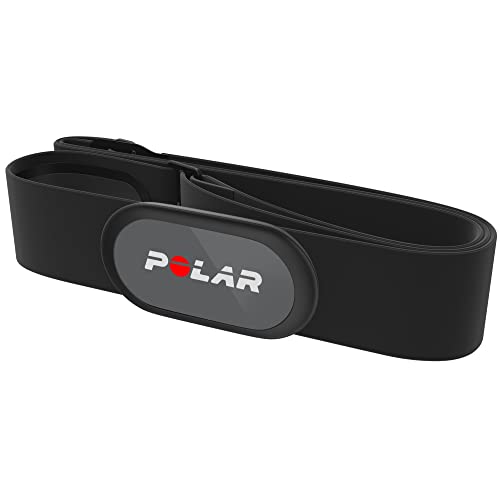
- High-accuracy chest-strap tracking
- Works with compatible equipment and apps
- Up to 400 hours of listed battery life
Best For: Everyday training with a traditional chest strap
Best Dual-Protocol Chest Strap
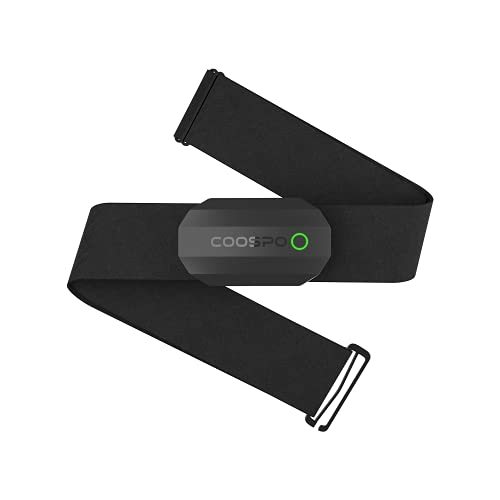
- ±1 BPM heart-rate monitoring
- Bluetooth and ANT+ connectivity
- Up to 300 hours per battery
Best For: Multi-device training and fitness apps
Best All-in-One Wearable

- Heart-rate and sleep monitoring
- 140+ sports modes
- Bluetooth calls and notifications
Best For: Everyday fitness and smartwatch convenience
Best for Cycling Equipment
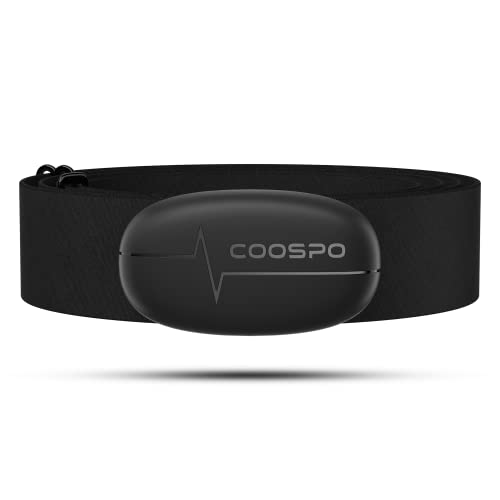
- ±1 BPM real-time heart-rate data
- Bluetooth and ANT+ support
- Works with bike computers and gym equipment
Best For: Cycling and connected indoor training
Most Accurate Chest Strap – Polar H10
The Polar H10 is a strong choice for athletes who prioritize precision from their heart rate monitors. Its chest-strap design, broad connectivity, waterproof construction, and internal memory make it practical for workouts with or without a nearby phone or watch.
Best For: Athletes seeking highly accurate heart rate data and flexible device compatibility.
Pros:
- Recognized for highly accurate heart rate measurement.
- Supports Bluetooth, ANT+, and 5 kHz connections, including simultaneous Bluetooth connections.
- Waterproof and equipped with internal memory for multiple hours of data.
- Battery life is rated at up to 400 hours.
Cons:
- Chest straps may be less convenient than armband designs for some users.
- The included CR2025 battery must be replaced with the specified battery type.
The H10 stands out when measurement accuracy and connectivity options matter most. It is especially useful for structured training with compatible watches, phones, fitness equipment, or apps.
Best for Garmin Training Data – Garmin HRM 600
The Garmin HRM 600 is a data-focused option among heart rate monitors, sending real-time heart rate and HRV data to compatible Garmin devices, fitness equipment, and apps. It also records workouts when wearing a watch is impractical and adds advanced running metrics for compatible Garmin watches.
Best For: Garmin users who want running dynamics, workout recording, and swim-data support.
Pros:
- Transmits real-time heart rate and HRV data to compatible equipment and apps.
- Tracks running dynamics such as stride length, vertical oscillation, and ground contact time balance with a compatible smartwatch.
- Can record workouts without a watch and sync data to Garmin Connect.
- Provides stored heart rate data during swimming and offers a machine-washable strap.
Cons:
- Advanced running metrics require a compatible Garmin smartwatch.
- Battery life is rated at up to two months, shorter than some replaceable-battery models.
- Garmin-focused features may be less useful outside compatible devices and apps.
The HRM 600 is built for athletes who want more than basic pulse readings. Its workout recording, swim support, HRV data, and running metrics make it the most feature-rich Garmin option in this group.
Most Comfortable Armband – COROS Heart Rate Monitor
The COROS Heart Rate Monitor offers an armband alternative to traditional heart rate monitors, with a soft, breathable fabric band and automatic wear detection. It connects to up to three devices at once over Bluetooth and is designed for sports and workout use rather than daily heart rate tracking.
Best For: Athletes who prefer a comfortable, easy-clean armband for sports and exercise.
Pros:
- Soft, breathable band is designed for comfort during activities.
- Can connect simultaneously with up to three Bluetooth devices.
- Automatic wear detection powers the monitor on and off when worn.
- Provides 38 hours of operation or up to 80 days of standby time.
Cons:
- Bluetooth-only connectivity means it is not compatible with ANT+.
- It is not intended for daily heart rate tracking.
- The USB charging cable is included, but a Type-C adapter is not.
This COROS monitor is a practical pick if a chest strap feels restrictive. Its flexible fit, automatic activation, and multi-device Bluetooth pairing suit workout-focused users who value comfort.
Best Long-Battery Garmin Option – Garmin HRM 200
The Garmin HRM 200 is a straightforward option for users who want accurate heart rate and HRV data without frequent charging. It works with compatible Garmin watches, cycling computers, fitness equipment, apps, and smartphones, while its washable strap and 3 ATM water rating support regular training.
Best For: Garmin users seeking dependable heart rate data and long battery life.
Pros:
- Transmits real-time heart rate and HRV data to compatible devices and apps.
- Offers up to one year of battery life with a user-replaceable battery.
- Has a durable 3 ATM water rating.
- Machine-washable strap simplifies cleaning.
Cons:
- It does not list the advanced running dynamics or workout-recording features of the HRM 600.
- Compatibility and features depend on the connected Garmin devices, equipment, or apps.
The HRM 200 is a sensible everyday training companion for Garmin users who value low maintenance. Its replaceable battery and durable, washable construction make it a practical alternative to rechargeable models.
Best Armband Heart Rate Monitor – Polar Verity Sense
Polar Verity Sense - Optical Heart Rate Monitor Armband - ANT+, Dual Bluetooth, Gray, S-L
Check Price On AmazonThe Polar Verity Sense is a comfortable, wrist-free option for tracking heart rate during workouts. Its optical sensor can be worn on the upper or lower arm, placed under snug clothing, or clipped to compatible goggles, while Bluetooth and ANT+ support connections to phones, tablets, and other compatible devices.
Best For: Athletes who want a versatile optical heart rate monitor without wearing a device on the wrist.
Pros:
- Comfortable armband design leaves the wrist free.
- Supports ANT+ and Bluetooth, including two simultaneous Bluetooth connections.
- Can stream heart rate in real time or record workouts for later transfer.
- Includes an armband, charger, and goggle clip.
Cons:
- Requires a compatible connected device or app for viewing data.
- Its size range is listed as S-L.
The Verity Sense stands out for flexible placement and broad connectivity. It is a practical choice when comfort, workout freedom, and multiple wearing options matter more than having a display on the sensor itself.
Best Personal EKG Heart Monitor – KardiaMobile 6L EKG
The KardiaMobile 6L is a smartphone-connected personal EKG rather than a continuous exercise sensor. It records a six-lead EKG in about 30 seconds and provides FDA-cleared determinations for AFib, bradycardia, tachycardia, and normal sinus rhythm without requiring a membership.
Best For: People who want on-demand heart rhythm recordings to review on a compatible smartphone or tablet and share with a doctor.
Pros:
- Records detailed six-lead EKG results in approximately 30 seconds.
- Detects four listed rhythm results, including AFib and normal sinus rhythm.
- Unlimited recordings are available without a subscription.
- Compact, lightweight design uses a CR2016 battery.
Cons:
- Requires the Kardia app and a compatible smartphone or tablet.
- It does not check for heart attacks or replace routine medical care.
- Not tested or recommended for use with pacemakers or ICDs.
For buyers seeking a heart rate monitor for occasional rhythm checks rather than workout tracking, the KardiaMobile 6L offers more detailed readings than a standard pulse sensor. Use it as directed and seek medical care for concerning symptoms or emergencies.
Best Chest Strap Heart Rate Monitor – Polar H9 Heart Rate Sensor
Polar H9 Heart Rate Sensor – ANT + / Bluetooth - Waterproof HR Monitor with Soft Chest Strap, M-XXL
Check Price On AmazonThe Polar H9 is an affordable chest-strap heart rate monitor designed for dependable everyday tracking. Its sensor connects with compatible heart-rate equipment and popular smartphone apps, making it a straightforward choice for workouts that benefit from chest-based measurement.
Best For: Everyday exercisers who want a traditional chest strap with broad compatibility and a replaceable battery.
Pros:
- Uses Polar’s high-accuracy heart rate sensors.
- Works with all heart-rate-monitor-compatible equipment, according to the supplied details.
- Connects with popular smartphone tracking apps.
- Includes a soft strap and CR2025 battery.
Cons:
- Chest-strap design may be less convenient than an optical armband for some users.
- Fit is size-dependent, with listed options covering 20–26 inches or 26–36 inches.
- Requires a compatible phone, app, or other equipment to view tracked data.
The H9 focuses on core heart rate tracking rather than extra features. Its broad compatibility and long listed battery life make it a sensible option for buyers who prefer a chest strap and already use compatible training equipment or apps.
Best Dual-Protocol Chest Strap – COOSPO H808S
The COOSPO H808S is a focused choice among heart rate monitors for athletes who want real-time readings from a chest strap rather than a smartwatch. It supports both Bluetooth 4.0 and ANT+, works with numerous fitness apps and devices, and offers a replaceable battery rated for up to 300 hours.
Best For: Runners, cyclists, and indoor-training users who need broad Bluetooth and ANT+ compatibility.
Pros:
- Claims heart-rate accuracy within ±1 BPM.
- Dual Bluetooth and ANT+ connectivity supports multiple device types.
- Works with apps and platforms including Peloton, Strava, Wahoo Fitness, Polar Beat, and Zwift.
- IP67 water resistance and a replaceable CR2032 battery rated for 300 hours.
Cons:
- Requires moistening the electrode zones before use.
- It is a sensor-and-strap system without an integrated display.
- The strap is recommended for replacement after six months or 300 washes.
The H808S is a practical, app-connected heart rate monitor for structured training. Its dual-protocol support is especially useful if you switch between a phone, bike computer, sports watch, or compatible gym platform.
Best All-in-One Wearable – Smart Watch Fitness Tracker
This smartwatch takes a broader approach to heart rate monitors by combining heart-rate tracking with a 1.83-inch display, sleep analysis, step counting, and more than 140 sports modes. It also adds Bluetooth calling, notifications, and IP68 water resistance for everyday wear.
Best For: Users who want heart-rate and fitness tracking alongside smartwatch features in one wearable.
Pros:
- Tracks real-time heart rate and sleep quality.
- Offers more than 140 sports modes, including walking, running, cycling, and swimming.
- Includes a 1.83-inch HD IPS touchscreen with customizable watch faces.
- Supports Bluetooth calls, notifications, music control, and a claimed five-to-seven-day daily-use battery life.
Cons:
- GPS functionality is provided through a connected smartphone rather than built in.
- The watch cannot be used to reply to messages.
- Heart-rate and other health features are tracking tools, not medical devices.
Choose this model if convenience matters more than a dedicated chest-strap setup. It is suited to all-day tracking and general workouts, while users seeking specialized training data may prefer a purpose-built heart rate sensor.
Best for Cycling Equipment – COOSPO H6 Chest Strap
The COOSPO H6 is a chest-strap heart rate monitor designed for dependable connections to cycling computers, sports watches, gym equipment, and fitness apps. Bluetooth and ANT+ support make it flexible for training setups, while the replaceable battery provides up to 300 hours of use.
Best For: Cyclists and indoor-training users connecting a chest strap to bike computers, smart equipment, or sports watches.
Pros:
- Provides real-time heart-rate data with claimed ±1 BPM accuracy.
- Connects through both Bluetooth and ANT+.
- Compatible with Garmin and other bike computers, sports watches, Peloton, Concept2, and several fitness platforms.
- IP67 protection supports rainy-day training and sweat exposure.
Cons:
- It is not intended for swimming or soaking.
- Electrode areas need to be moistened before wearing.
- Pairing should be completed in the fitness app rather than the phone’s Bluetooth settings.
The H6 is a strong fit for training environments built around cycling hardware or connected gym equipment. Its compatibility range is the main advantage, though it requires the normal setup and maintenance of a chest strap.
How We Picked These Heart Rate Monitors
We selected products across several common use cases rather than treating every device as interchangeable. Chest straps typically provide highly responsive readings for interval training and cycling, while optical armbands can be more comfortable for users who dislike chest bands. We also included connected fitness devices and a six-lead ECG option for buyers seeking more detailed heart readings than exercise tracking alone.
Our comparison considers sensor type, ANT+ and Bluetooth support, compatibility with phones and fitness equipment, battery or recording limits, water resistance, fit, and overall practicality. Medical-style devices should not be treated as substitutes for professional diagnosis or emergency care.
Quick Comparison
- Best for serious training: Polar H10 and Garmin HRM 600 offer feature-rich chest-strap tracking and broad connectivity.
- Best for comfort: Polar Verity Sense and COROS Heart Rate Monitor use an armband design that avoids a chest strap.
- Best for value: Garmin HRM 200, Polar H9, COOSPO H808S, and COOSPO H6 cover essential workout tracking at generally lower prices.
- Best for ECG-style readings: KardiaMobile 6L is designed for spot checks and rhythm recordings rather than continuous exercise monitoring.
- Best all-in-one wearable: A fitness smartwatch can combine heart-rate tracking with calls, activity modes, notifications, and general wellness features.
Key Buying Factors for Heart Rate Monitors
Sensor Type and Accuracy
Chest straps usually respond fastest to sudden intensity changes, making them a strong choice for intervals, racing, and structured training. Optical armbands can be easier to wear and may work well for steady-state exercise, but fit and skin contact affect results.
Connectivity and Compatibility
Check whether the monitor supports Bluetooth, ANT+, or both. Bluetooth is useful for phones and many apps, while ANT+ remains common on bike computers, gym equipment, and sports watches. Multiple connection options provide more flexibility.
Comfort, Fit, and Water Resistance
A secure fit is essential for reliable readings. Chest straps should sit firmly below the chest muscles without restricting breathing; armbands should be snug but not tight. For swimming or heavy sweating, verify the stated waterproof or water-resistance rating and whether the device supports your intended activity.
Battery Life and Maintenance
Consider whether you prefer a replaceable coin cell, rechargeable battery, or a device that needs periodic charging. Rinse washable straps after workouts, allow sensors to dry, and follow the manufacturer’s storage guidance to extend strap and battery life.
Who Should Buy Which Heart Rate Monitors?
Choose a chest strap if accurate, fast workout readings are your priority, especially for running, cycling, rowing, HIIT, or structured training. Choose an armband if you want a less restrictive fit or regularly find chest straps uncomfortable. Choose a smartwatch if you want heart-rate data alongside notifications, activity tracking, and other daily-wear features.
Choose an ECG-focused device for occasional rhythm recordings and sharing data with a healthcare professional when appropriate, not as a replacement for clinical evaluation. For most buyers, the best option is the model that works with their existing apps or equipment, stays comfortable during the longest workout, and provides the connection standard they actually use.