Choosing a cable crossover machine for rehab is about more than adding resistance. You want smooth movement, easy adjustability, and a stable setup that supports controlled exercises.
Below, we focus on functional trainers that can help with mobility work, post-injury strengthening, and progressive training at home or in a commercial gym.
Best 10 Cable Crossover Machine for Rehab Picks for 2026
Commercial-Grade Rehab Hub
XMARK Dual Stack Functional Trainer
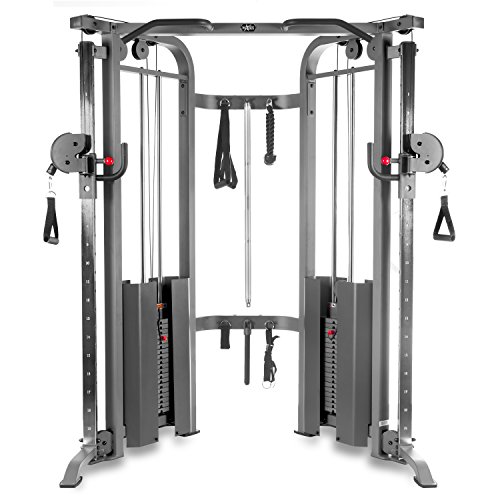
- Dual 200 lb stacks with 2:1 resistance ratio
- 19 cable positions for controlled exercise angles
- Includes straps, rope, ankle straps, and pull-up bar
Best For: Home or rehab facilities needing a versatile, sturdy cable trainer
Wall-Saving Rehab Station
GOIMU WM1 Wall Mount Cable Crossover

- 3.28 sq. ft. wall-mounted footprint
- 17 positions with switchable 1:1 and 2:1 ratios
- Includes lat bar, rope, and D-handle attachments
Best For: Small home or garage gyms that need a compact, adjustable cable station
Smooth-Track Rehab Crossover
Body-Solid Best Fitness Functional Trainer

- Patented nylon bushings and sealed ball bearings
- Pulleys swivel over 180 degrees for flexible motion
- 190 lb stack with a 10-year frame warranty
Best For: Users wanting smooth cable travel and a long-lasting functional trainer
Heavy-Duty Plate-Loaded Rehab Cable Rig
Wall Mount Cable Machine with 19 Positions

- 400 lb max load with carbon steel construction
- 19 positions and 360-degree rotating brackets
- Works with 1-inch and 2-inch plates, plus multiple attachments
Best For: Plate owners who want a strong, wall-mounted cable machine for a small gym
Heavy-Duty Dual Stack Choice
Body-Solid Powerline Cable Crossover Exercise Machine

- Dual independent 160 lb. weight stacks
- High and low pulley setup for varied exercises
- Sturdy extra-wide frame with long frame warranty
Best For: Users who want a full-size cable crossover machine for controlled rehab and broader training
Space-Saving Wall Mount Pick
ER Kang Wall-Mount Cable Station

- Wall-mounted design saves floor space
- 18 pulley positions for unilateral or bilateral training
- 11-gauge steel frame with 2200 lb tensile-strength cables
Best For: Compact home setups that need adjustable cable work for rehab and general training
Precision Adjustment Option
Adjustable Dual-Stack Functional Trainer

- 17 cable positions with height-adjustable handles
- 2:1 resistance ratio for precise load control
- 11-gauge steel frame with aluminum pulleys
Best For: Users who want a compact, adjustable trainer for controlled rehab-style cable work
Compact Wall-Mount Option
Mikolo Wall Mount Cable Station for Home Gyms

- 19 pulley height positions for controlled training
- Wall-mounted design saves valuable floor space
- Includes lat bar, cable bar, rope, and strap handles
Best For: Compact home gyms needing adjustable cable work for controlled rehab progress
Most Adjustable Wall Mount
GMWD Cable Machine with Dual Swivel Arms

- 26 height holes and 13 arm-angle settings
- Switches between 2:1 and 1:1 cable ratios
- Foldable wall design reduces footprint when stored
Best For: Users who want fine-tuned positioning for rehab and progressive cable training
Best All-in-One Corner Fit
Mikolo Functional Trainer with High and Low Pulley

- 17 adjustable positions per side
- High and low pulley system broadens exercise options
- Includes lat bar, row bar, and strap handles
Best For: Corner home gyms needing an all-in-one trainer with rehab-friendly versatility
Commercial-Grade Rehab Hub – XMARK Dual Stack Functional Trainer
If you want a cable crossover machine for rehab that can handle controlled, progressive training, this XMARK functional trainer is built for that role. The dual 200 lb weight stacks, 19 cable positions, and smooth pulley action make it easy to work through upper-body, lower-body, and accessory movements with precision in a compact footprint.
Best For: Home or rehab settings that need a sturdy, all-in-one cable station with lots of exercise variety.
Pros:
- Dual 200 lb weight stacks with a 2:1 resistance ratio for controlled loading.
- 19 cable positions and smooth pulley action support a wide range of rehab-friendly angles.
- Includes hand straps, triceps rope, and ankle straps for versatile movement options.
- Compact enough for home and garage gyms, with angled stacks for corner placement.
Cons:
- Large and heavy, with freight delivery required.
- Better suited to dedicated spaces than tight multi-use rooms.
For buyers who want a durable, fixed cable station with plenty of adjustment points, this model offers strong utility for steady progression. The built-in pull-up station and attachment compatibility add even more training flexibility as rehab needs evolve.
Wall-Saving Rehab Station – GOIMU WM1 Wall Mount Cable Crossover
This wall-mounted cable crossover machine for rehab is a smart pick when floor space is limited but you still want a serious cable setup. With 17 height positions, dual independent pulleys, and the option to switch between 1:1 and 2:1 ratios, it supports precise, adjustable training for presses, rows, flys, and more.
Best For: Garage or home gym users who need a compact wall-mounted cable station with broad exercise coverage.
Pros:
- Very small footprint at 3.28 sq. ft. for space-conscious setups.
- 17 height settings and dual pulleys provide flexible exercise angles.
- Switchable 1:1 and 2:1 pulley ratios for heavier lifts or lighter work.
- Includes multiple accessories such as lat bar, tricep rope, and D-handles.
Cons:
- Wall-mounted design may not suit every room or renter situation.
- Max recommended weight is 300 pounds, so it is not the heaviest-duty option here.
Overall, this is a practical choice if you want a stable, space-saving cable machine that still feels feature-rich. The flush wall design and included attachments make it especially appealing for controlled, repeatable rehab work.
Smooth-Track Rehab Crossover – Body-Solid Best Fitness Functional Trainer
For a cable crossover machine for rehab, this Body-Solid functional trainer stands out for its smooth pulley design and broad exercise range. The top and bottom pulleys swivel over 180 degrees, which helps you work through many movement patterns with controlled, friction-light motion.
Best For: Buyers who want a proven, versatile cable machine with a long warranty and smooth cable travel.
Pros:
- Patented nylon bushing technology and sealed ball bearing pulleys for smooth operation.
- Top and bottom pulleys swivel over 180 degrees for flexible exercise paths.
- Supports a long list of movements, including rows, flys, pulldowns, and pressdowns.
- 10-year frame warranty adds confidence for long-term use.
Cons:
- Its footprint is substantial, so it needs a dedicated workout area.
- Weight stack is 190 lb, which may be more than some users need for rehab-focused work.
This is a strong all-around option if you value smooth cable feel and exercise variety more than minimal footprint. It is well suited to home gym owners who want a dependable machine that can grow with their training.
Heavy-Duty Plate-Loaded Rehab Cable Rig – Wall Mount Cable Machine with 19 Positions
If you are shopping for a cable crossover machine for rehab and want plate-loaded flexibility, this wall mount cable machine offers a lot in a compact package. The dual pulley system, 19 height positions, and adjustable footplate make it easy to dial in different angles for presses, rows, curls, and pull movements.
Best For: Home gym owners who want a wall-mounted, plate-loaded cable machine with strong load capacity.
Pros:
- Supports up to 400 lb max load with high-density carbon steel construction.
- 19 adjustable positions plus 360-degree rotating brackets for placement flexibility.
- Plate-loaded design works with 1-inch and 2-inch weight plates.
- Includes multiple attachments, such as handles, triceps rope, T-bar, and lat bar.
Cons:
- Requires weight plates, so it is not a complete stack-based system.
- 30-day manufacturer warranty is shorter than some competing machines.
This model makes sense if you already own plates and want a strong, customizable cable setup for a small space. Its combination of load capacity and accessory package makes it useful for progressive training sessions.
Heavy-Duty Dual Stack Choice – Body-Solid Powerline Cable Crossover Exercise Machine
If you want a cable crossover machine for rehab that can also handle broader strength work, this Body-Solid Powerline functional trainer offers true isolateral movement with dual independent weight stacks. The high and low pulley setup gives you a wide exercise range, so it can support controlled upper- and lower-body cable work as you progress through recovery and beyond.
Best For: Home or commercial users who want a sturdy, full-size dual-stack machine for controlled rehab-friendly cable exercises.
Pros:
- Dual 160 lb. weight stacks support independent, isolateral training.
- Wide pulley range allows high and low cable exercises for full-body programming.
- Sturdy, extra-wide frame is built for heavy use.
- Backed by a 10-year frame warranty and 1-year parts warranty.
Cons:
- Large footprint makes it less suitable for tight spaces.
- Heavier, commercial-style build may be overkill for very light rehab needs.
Overall, this is a solid pick if you want a robust machine that can scale from rehabilitation-style cable work into more demanding training. Its true dual-stack design and broad exercise list make it especially practical for gradual progression.
Space-Saving Wall Mount Pick – ER Kang Wall-Mount Cable Station
For a cable crossover machine for rehab where space is limited, this wall-mounted ER Kang cable station is designed to keep the footprint small while still offering dual-pulley training. The 18 adjustable positions, smooth sliding track design, and included attachments make it easy to work through controlled cable movements at home.
Best For: Home gym users who need a compact wall-mounted cable tower for controlled cable exercises and rehab-style training.
Pros:
- Wall-mounted design saves floor space in a home, garage, or office gym.
- Dual adjustable pulley sleeves with 18 positions support unilateral or bilateral work.
- Commercial-grade 11-gauge steel frame and 2200 lb tensile-strength cables add durability.
- Includes lat bar, cable bar, and tricep rope for more exercise options.
Cons:
- Not as versatile as a full crossover frame for some movements.
- Requires wall mounting, so installation is less flexible than freestanding units.
This model makes sense if rehab-friendly cable work is your priority and you need to preserve space. It gives you adjustable pulley height and sturdy construction without the bulk of a large crossover system.
Precision Adjustment Option – Adjustable Dual-Stack Functional Trainer
If you’re comparing a cable crossover machine for rehab, this functional trainer stands out for precise setup and smooth adjustments. It uses 17 cable positions, height-adjustable handles, and a 2:1 resistance ratio, which can be helpful when you want finer control over cable-based movements and gradual loading.
Best For: Buyers who want a compact functional trainer with precise adjustments for controlled rehab work and everyday strength training.
Pros:
- 17 adjustable cable positions allow a wide range of movement patterns.
- 2:1 resistance ratio and 10 lb stacks make load changes more precise.
- 11-gauge steel frame and aluminum pulleys are built for smooth operation.
- Includes D-handles, extra grip options, and an exercise diagram.
Cons:
- Large, heavy machine may not fit smaller rooms easily.
- Assembly and placement are better suited to dedicated gym spaces.
This is a strong fit if you want a cable station that emphasizes control, smooth cable travel, and easy adjustment. Its compact functional-trainer format still offers enough versatility for rehab-oriented routines and more advanced training later on.
Compact Wall-Mount Option – Mikolo Wall Mount Cable Station for Home Gyms
If you want a cable crossover machine for rehab in a tight home setup, this Mikolo wall-mount station gives you a lot of adjustability without taking over the room. The dual pulley system, 19 height positions, and included handles make it easier to work through controlled upper- and lower-body cable movements at a manageable footprint.
Best For: Home users who need a compact wall-mounted cable station with plenty of pulley positions for controlled rehab-style training.
Pros:
- Compact wall-mounted design helps save floor space in a home, garage, or office gym.
- Dual adjustable pulleys with 19 height positions support unilateral or bilateral movements.
- Includes lat bar, cable bar, tricep rope, and adjustable strap handles for varied exercises.
- Rated for up to 400 pounds with a 2200-pound tensile-strength cable system.
Cons:
- Wall mounting limits placement flexibility compared with free-standing trainers.
- No folding design, so it stays as a fixed installation once mounted.
- Best suited to users comfortable with a larger, permanent home-gym setup.
Overall, this is a strong option if your rehab-focused training needs controlled cable work and you also want a durable, space-conscious machine. Its adjustment range and included attachments make it versatile enough for progressive return-to-training work.
Most Adjustable Wall Mount – GMWD Cable Machine with Dual Swivel Arms
For a cable crossover machine for rehab, the GMWD wall-mounted trainer stands out for its broad adjustability and smooth arm movement. With dual swivel arms, 26 height holes, 13 arm-angle settings, and the ability to switch between 2:1 and 1:1 cable ratios, it offers a flexible setup for controlled exercise variations.
Best For: Users who want a highly adjustable wall-mounted cable machine for varied, controlled rehab and strength work.
Pros:
- 26 height holes and 13 arm-angle settings allow very fine workout positioning.
- Dual swivel arms provide 180 degrees of smooth motion for diverse movements.
- Switchable 2:1 and 1:1 cable ratios let you adapt resistance levels.
- Foldable wall-mount design helps preserve space when not in use.
Cons:
- Installation is permanent and requires secure wall mounting.
- Weight recommendation is 350 pounds, lower than some heavier-duty competitors.
- Its broad feature set may be more than needed for very simple rehab routines.
In practical terms, this is a very adaptable pick if you want precise cable positioning for rehab-focused movement patterns. The combination of angle options and ratio changes makes it especially useful as training needs evolve.
Best All-in-One Corner Fit – Mikolo Functional Trainer with High and Low Pulley
If you want a cable crossover machine for rehab that also covers a wide range of full-body work, this Mikolo functional trainer is built for compact corners and smooth pulley use. It combines high and low pulley stations, 17 adjustable positions per side, and included bars and handles so you can keep movements controlled and organized.
Best For: Buyers who want a compact, all-in-one cable machine with high and low pulleys for rehab-friendly exercise variety.
Pros:
- Compact footprint is designed to fit a home-gym corner and save space.
- 17 height positions per side help dial in exercise setup.
- High and low pulley system supports lat pulldowns, rows, and cable flys.
- Includes lat pull-down bar, row bar, and two strap cable handles.
Cons:
- Requires a larger area than the wall-mounted Mikolo model.
- 350-pound capacity is solid, but not the highest in this group.
- As a plate-loaded trainer, it is less minimal than a simple rehab pulley setup.
This is a good middle-ground choice if your rehab work needs more than just a single pulley path. The added storage hooks and organized layout also make it easier to keep accessories tidy between sessions.
How We Picked the Best Cable Crossover Machine for Rehab
For a Cable Crossover Machine for Rehab, we prioritized adjustability, pulley smoothness, stack or resistance options, footprint, and build quality. We also favored machines with multiple cable positions, because rehab training often needs small changes in angle, height, and range of motion.
Quick Comparison
In general, wall-mounted units save floor space and can work well in dedicated home gyms, while freestanding functional trainers usually offer easier access and broader exercise variety. Dual pulley systems are especially useful for unilateral work, assisted mobility drills, and balanced strength rebuilding.
Key Buying Factors for a Cable Crossover Machine for Rehab
Adjustability
Look for multiple height positions and smooth changes in arm angle. Fine-tuned placement helps you keep movements pain-aware and controlled.
Resistance Feel
Rehab work benefits from predictable cable tension and low friction. A machine that feels jerky or inconsistent can make light-load exercises harder to perform safely.
Stability and Installation
Whether wall-mounted or freestanding, the machine should stay planted during one-arm pulls, rows, presses, and rotational work. Confirm ceiling height, wall type, and anchor requirements before buying.
Attachments and Exercise Variety
Handles, bars, and ankle or strap accessories expand what you can do without increasing load. That matters when your goal is controlled progression rather than maximum weight.
Size and Home Use
Many buyers need a compact option that still offers enough cable travel for rehab patterns. Measure your space carefully and leave room for safe entry, exit, and movement.
Who Should Buy Which Cable Crossover Machine for Rehab?
If you want the most versatile setup for ongoing rehab and general training, choose a fully adjustable functional trainer with dual stacks or dual pulleys. If your space is limited, a wall-mounted Cable Crossover Machine for Rehab can deliver a strong range of motion in a smaller footprint. Beginners and post-injury users should favor smoother, simpler machines with easy height changes, while more advanced users may want higher adjustment counts and more attachment options for progressive work.
For the best results, match the machine to your space, training goals, and comfort level. The right cable system should make rehab exercises feel controlled, repeatable, and easy to progress over time.