The best balance boards for seniors can support balance practice, ankle strength, posture, and lower-body stability—but the right design should feel manageable, secure, and easy to use consistently.
We compared these 10 options by platform control, adjustability, grip, weight capacity, and suitability for gradual training at home or alongside a physical therapy routine.
Best 10 Balance Boards for Seniors Picks for 2026
Simple Stability Pick
Amazon Basics Wood Wobble Board
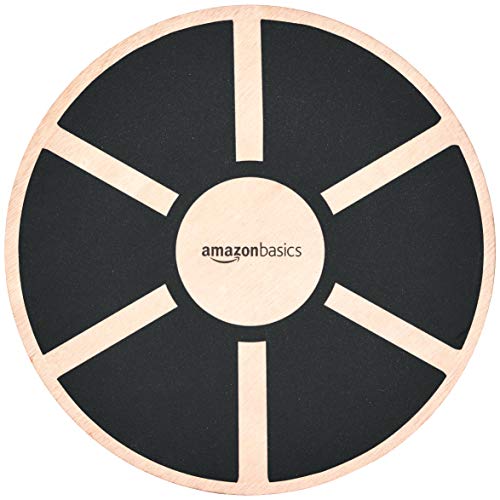
- Non-slip solid wood platform
- Supports up to 265 pounds
- Useful for balance, posture, and core exercises
Best For: Adults wanting a basic, traditional wobble board
Rehab Versatility Pick
Adjustable Wooden Balance and Slant Board

- Four adjustable incline positions
- Works for balance and calf stretching
- Includes non-slip and floor-protecting features
Best For: Beginners and older adults needing adjustable stretching support
Gentle Joint-Friendly Pick
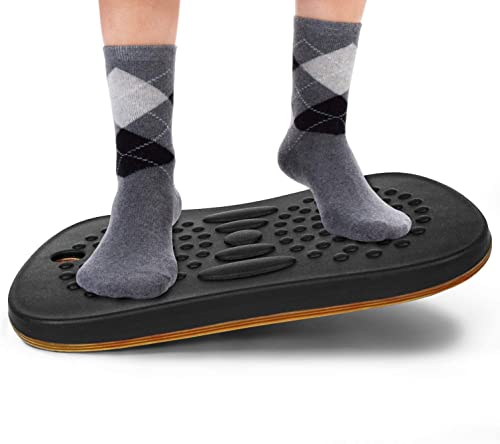
- Soft closed-cell EVA foam surface
- Textured grip helps resist slipping
- Designed for rehab and gentle balance work
Best For: Seniors preferring cushioned, lower-impact balance practice
Targeted Ankle Rehab Pick
Adjustable Ankle Stability Board

- Adjustable pegs support progressive training
- Targets ankle stability and foot mechanics
- Includes illustrated and video exercise guidance
Best For: Adults seeking focused ankle-strengthening practice
Stable Starter Pick
StrongTek Wooden Rocker Balance Board
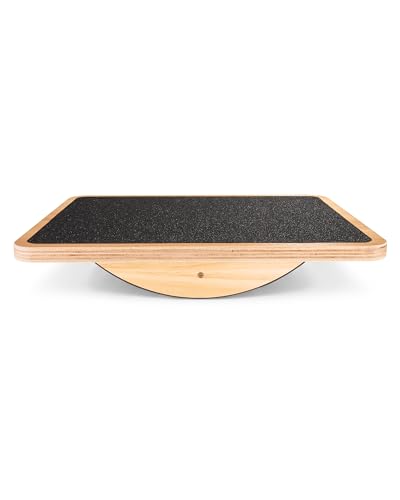
- Low-impact rocker motion for approachable balance practice
- Textured surface and sturdy hardwood construction
- Supports up to 350 pounds; compact and portable
Best For: Seniors seeking a basic board for gentle balance and conditioning
Family-Friendly Value

- Fully assembled for convenient use
- Textured top and non-slip silicone edge
- 350-pound capacity for shared household use
Best For: Seniors and families wanting a versatile balance-training board
Progressive Challenge
StrongTek Advanced 360-Degree Board

- Multidirectional wobble for advanced balance training
- Cross base offers more control than a round base
- Non-slip top and 350-pound weight capacity
Best For: Experienced seniors seeking a step up from basic rocker boards
Versatile Rehab Pick

- 360-degree rotation and up to 25-degree tilt
- Textured surface and solid wood construction
- Supports up to 350 pounds; no assembly required
Best For: Versatile balance practice, rehabilitation, and core training
Simple Stability Pick – Amazon Basics Wood Wobble Board
For shoppers comparing balance boards for seniors, this straightforward wood wobble board offers a compact way to practice standing balance, coordination, posture, and core-focused exercises. Its non-slip top and 265-pound capacity make it suitable for home workouts, though it should be used only on a dry, non-slip surface.
Best For: Adults seeking a traditional wobble board for basic balance and core exercises.
Pros:
- Non-slip surface supports a secure grip.
- Solid wood top supports up to 265 pounds.
- Can be used for standing poses, planks, push-ups, and targeted strengthening.
- Compact 15.75-inch square design is easy to store.
Cons:
- Fixed wobble design offers no incline adjustments.
- Requires a dry, non-slip surface and appropriate care during use.
- The firm wood platform may feel less gentle than a foam balance pad.
This is a practical choice for users who want a simple, durable balance trainer rather than a specialized rehabilitation system. Beginners should use support as needed and progress gradually.
Rehab Versatility Pick – Adjustable Wooden Balance and Slant Board
Among balance boards for seniors, this 2-in-1 model stands out for its four adjustable incline positions and ability to function as both a balance board and slant board. It is designed for beginners, older adults, stretching, physical therapy routines, and standing-desk use.
Best For: Beginners and older adults who want adjustable balance practice plus calf and foot stretching.
Pros:
- Four incline positions support customized stretching and exercise.
- Non-slip surface, antiskid feet, and floor-protecting pads add stability.
- Can support balance work, calf stretching, posture practice, and standing-desk use.
- Compact and lightweight for home, office, outdoor, or therapy settings.
Cons:
- Its stated product details list different weight capacities, so shoppers should verify the applicable limit.
- More moving or adjustable components may require familiarization.
- The wood design may be less cushioned than a foam option.
Its adjustable format gives caregivers and users more ways to start gently and change the challenge over time. It is especially appealing when stretching and standing comfort matter as much as balance training.
Gentle Joint-Friendly Pick – Yes4All Foam Balance Pad
For balance boards for seniors that prioritize a softer feel, this Yes4All model uses closed-cell EVA foam with a textured, sweat-resistant surface. It is designed for balance training, rehabilitation, physical therapy, and lower-impact exercise, making it a gentler alternative to a firm wobble platform.
Best For: Seniors and users who prefer a cushioned balance surface for gentle training or rehabilitation.
Pros:
- Soft EVA foam is designed to add comfort and safety.
- Textured surface helps reduce slipping or sliding.
- Suitable for rehabilitation, physical therapy, yoga, and common exercises.
- Product details list a maximum weight recommendation of 400 pounds.
Cons:
- Foam may provide less pronounced wobble feedback than a rigid wood board.
- It is relatively large at approximately 20 by 13.9 by 2.2 inches.
- Warranty and return durations are described inconsistently in the supplied notes, so verify current terms.
This is a sensible option when joint comfort and a forgiving surface are priorities. Its broad exercise range also makes it useful for gradual balance work beyond standing drills.
Targeted Ankle Rehab Pick – Adjustable Ankle Stability Board
This compact adjustable board takes a more targeted approach than general balance boards for seniors, focusing on ankle stability, foot mechanics, and controlled 360-degree movement. Adjustable pegs allow users to progress from seated exercises toward more demanding drills, while the included guide and video tutorials support setup.
Best For: Adults working on ankle stability or recovery-related exercises who want adjustable, targeted practice.
Pros:
- Adjustable pegs allow multiple training configurations.
- Designed for ankle strengthening, balance, coordination, and foot-focused rehabilitation.
- Textured non-slip birch wood surface supports barefoot use.
- Includes an illustrated guide and QR-code video tutorials.
Cons:
- The narrow 11.8-by-4.3-inch format is focused on ankle work rather than broad standing balance.
- Users recovering from surgery or injury may need professional guidance before use.
- Its advanced adjustability may be more than needed for simple beginner balance practice.
This is the most specialized choice in the group. Its small footprint and adjustable design suit targeted ankle routines, but it should not be treated as a substitute for individualized medical or physical-therapy advice.
Stable Starter Pick – StrongTek Wooden Rocker Balance Board
For seniors comparing balance boards for seniors, this StrongTek rocker board offers a straightforward, low-impact way to practice balance, core engagement, and conditioning. Its front-to-back rocking motion, textured top, and compact size make it practical for home use or a standing desk.
Best For: Seniors who want a basic rocker board for gentle balance practice, conditioning, or rehabilitation-oriented exercise.
Pros:
- Rocker design provides a simpler starting point than a multidirectional wobble board.
- Textured surface helps provide a secure grip during use.
- Supports up to 350 pounds and is compact enough for storage or travel.
- Made from durable hardwood plywood and backed by a 30-day money-back guarantee.
Cons:
- The basic rocker version offers less directional challenge than a 360-degree board.
- Users should still exercise appropriate caution, particularly during balance or rehabilitation work.
This is a sensible entry point for seniors who prefer a stable, uncomplicated balance-training format. Its portable design and weight capacity add versatility, while the rocker movement keeps the challenge relatively approachable.
Family-Friendly Value – Juoe Wooden Wobble Board
The Juoe wobble board is a practical option among balance boards for seniors who want a fully assembled platform for home, outdoor, or gym use. Its textured surface and non-slip silicone edge are designed to add traction while users work on balance and whole-body coordination.
Best For: Seniors and families wanting a versatile wooden board for general balance practice, physical-therapy exercises, or shared use.
Pros:
- Arrives fully assembled for convenient use.
- Textured top and non-slip silicone edge help increase traction on multiple floor surfaces.
- Supports up to 350 pounds and can be used by adults and children.
- Compact 17.5-by-13.5-inch footprint works at home, outdoors, or in a gym.
Cons:
- The product notes emphasize family and children’s use, so seniors may prefer a board marketed specifically for adult rehabilitation.
- As a wobble board, it may require more balance control than a simple rocker design.
Choose this model if easy setup and a grippy base are priorities. It offers broad household versatility, though users should match the wobble challenge to their comfort and balance ability.
Progressive Challenge – StrongTek Advanced 360-Degree Board
For seniors ready to progress beyond basic rocking, this advanced StrongTek board adds controlled 360-degree movement. Its cross base offers a larger floor contact area than a traditional round-base wobble board, creating an intermediate option for balance, ankle control, coordination, and core training.
Best For: Seniors with some balance-board experience who want a more challenging, multidirectional training step.
Pros:
- 360-degree directional wobble provides more varied training than a basic rocker.
- Cross base is designed to feel more controlled than a traditional round-base board.
- Textured non-slip surface helps keep feet secure during weight shifts.
- Supports up to 350 pounds and suits home workouts, standing desks, and balance practice.
Cons:
- More demanding than a basic rocker, making it less suitable as a first balance board.
- Its advanced movement may not be appropriate for every senior or rehabilitation routine.
This model makes the most sense for a confident user seeking progression rather than maximum simplicity. The cross base moderates the challenge, but seniors should still begin gradually and use support when needed.
Versatile Rehab Pick – Advanced Wood Balance Board
For shoppers comparing balance boards for seniors, this sturdy wooden model offers a broad platform, a 360-degree rotation base, and a textured surface for balance and coordination practice. It arrives assembled and supports up to 350 pounds, though beginners should start near a stable support.
Best For: Seniors and adults seeking a versatile balance, rehabilitation, or core-training board at home, in a gym, or while traveling.
Pros:
- 360-degree rotation with up to a 25-degree tilt for varied practice.
- Textured silicone surface helps provide a secure, comfortable grip.
- Solid wood construction supports up to 350 pounds and requires no assembly.
- Can be used for physical therapy, posture work, squats, planks, and other exercises.
Cons:
- The 17.5-by-13.4-inch platform may feel challenging for users new to wobble boards.
- The product is relatively heavy at about 2.68 kg.
- Its wide range of motion may be more advanced than some seniors need initially.
This is a feature-rich choice for users who want one board for balance training and rehabilitation. Its rotating base and generous weight rating are useful, but controlled progression is advisable for beginners.
Controlled Training Choice – JFIT 15.4-Inch Balance Board
This JFIT model is a practical option among balance boards for seniors, combining 360-degree movement with an 18-degree tilting angle. Its textured top, 300-pound capacity, and compact wooden platform suit balance drills, posture work, and rehabilitation routines.
Best For: Seniors, physical therapy users, and adults who want a compact board for balance, ankle strength, posture, or active standing.
Pros:
- 360-degree motion and an 18-degree tilt support progressive training.
- Textured non-slip surface helps provide secure footing.
- Sturdy wood construction supports users up to 300 pounds.
- Works for rehabilitation, squats, push-ups, posture practice, and standing-desk use.
Cons:
- The 18-degree tilt may still require a nearby support for some beginners.
- Its 15.75-inch diameter provides less standing area than a larger platform.
- It has a lower maximum weight recommendation than the 350-pound models in this roundup.
With a defined tilt angle and dependable wooden platform, this is a balanced middle-ground option. It offers useful versatility without emphasizing an unusually large or highly specialized design.
Beginner-Friendly Rocker – Professional Wooden Wobble Board
For balance boards for seniors, this wooden rocker board focuses on straightforward side-to-side and front-to-back movement. The non-slip top and floor-protecting foot pads make it suitable for home, office, or rehabilitation use, while its design is specifically described as appropriate for beginners and people with balance issues.
Best For: Beginners, seniors, and users rebuilding lower-leg or ankle strength through simple rocking exercises.
Pros:
- Rocker motion supports side-to-side and front-to-back weight shifting.
- Designed for beginners, seniors, and people with balance concerns.
- Non-slip surface and floor-safe foot pads add practical protection.
- Lightweight and portable for home, office, or gym use.
Cons:
- The rocker design does not provide the 360-degree rotation offered by some alternatives.
- The notes do not specify the board’s dimensions or tilt angle.
- More advanced users may find its movement range less versatile for complex drills.
This is the most approachable choice for users who prefer simple directional rocking over full rotation. Its portability and floor-friendly pads make it especially convenient for gentle practice in everyday spaces.
How We Picked the Best Balance Boards for Seniors
We focused on features that matter most for controlled, low-impact practice: a slip-resistant surface, a stable platform, predictable movement, useful weight capacity, and construction that can withstand repeated use. Adjustable models earned extra consideration because they let users begin with a gentler range of motion before progressing.
We also considered whether each board is better suited to rocking, 360-degree wobbling, ankle conditioning, stretching, standing-desk use, or physical therapy. Product descriptions and specifications can vary, so confirm the current dimensions, materials, capacity, and included accessories before buying.
Quick Comparison
| Board style | Best for | What to look for |
|---|---|---|
| Rocker board | Beginners and gentle side-to-side practice | Wide base, non-slip top, controlled tilt |
| 360-degree wobble board | More advanced coordination training | Adjustable difficulty and secure grip |
| Adjustable incline board | Stretching and calf or ankle work | Multiple angle settings and stable support |
| Foam or anti-fatigue board | Standing comfort and light movement | Soft support, easy cleaning, low instability |
Key Buying Factors for Balance Boards for Seniors
Stability and Movement Range
Start with a broad rocker platform or a model with a limited tilt angle if balance training is new. A 360-degree board can provide more challenge, but it may feel unpredictable for beginners. Adjustable designs are useful when multiple users have different abilities.
Grip and Safety
Choose a textured, rubberized, or otherwise slip-resistant top and a base that stays planted on a hard, level surface. Use the board near a sturdy countertop, rail, or other support. Avoid using it on wet floors, loose rugs, or cluttered surfaces.
Capacity, Size, and Construction
Check the stated weight limit with a comfortable margin rather than choosing the minimum rating. A wider platform can feel more reassuring, while wood construction may offer rigidity and durability. Confirm that the board fits the available storage and practice area.
Training Purpose
Some boards are designed mainly for balance and core work, while others also support ankle strengthening, calf stretching, or standing-desk movement. Match the board to the intended routine instead of choosing the most challenging model by default.
Who Should Buy Which Balance Boards for Seniors?
Beginners should generally choose a wide rocker board with strong traction and a modest tilt. Anyone working on ankle stability may prefer an adjustable model that permits small, repeatable movements. Users seeking a greater coordination challenge can consider a 360-degree wobble board, provided they already have a safe training routine.
For stretching, select a dedicated incline or slant board with several angle settings. For light movement while standing, an anti-fatigue or office-oriented option may be more comfortable than a highly unstable trainer. If balance problems follow an injury, neurological condition, dizziness, or a fall, ask a clinician or physical therapist which style and difficulty are appropriate before using one.