The best resistance bands for sprint mechanics add controlled load to acceleration drills, running patterns, and lower-body strength work without the bulk of traditional equipment. The right system can help athletes practice forceful starts, knee drive, posture, and rapid ground contact.
This roundup compares 10 speed-training options, including waist-belt bungees, leg bands, and multi-piece kits. Use the buying guide below to match resistance, fit, adjustability, and training goals to your sport and experience level.
Best 10 Resistance Bands for Sprint Mechanics Picks for 2026
Top Multi-Directional Pick
Kinetic Bands Acceleration Speed Cord
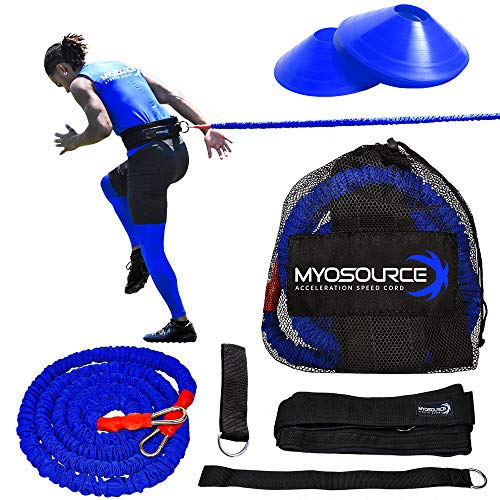
- 360-degree D-ring for directional drills
- Three belt sizes included
- Eight stackable agility cones included
Best For: Sprint, agility, and acceleration drills
Best Heavy-Duty Option
SKLZ Recoil 360 Resistance Belt
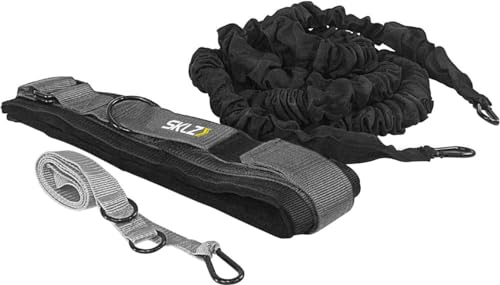
- 15–50 pounds of stated resistance
- 8–22-foot stretch range
- Free-motion ring for angled resistance
Best For: Heavy multidirectional speed and power training
Best Adjustable Band Set
Elite Supplies Leg Resistance Bands

- Four levels from 10 to 30 pounds
- Two leg straps included
- Mesh carry bag included
Best For: Leg strength and glute activation alongside sprint work
Best Portable Training Set
Explosive Training Resistance Kit

- Up to 50 pounds of resistance
- 360-degree multidirectional D-ring
- Carrying bag included
Best For: Portable acceleration and agility drills
Best Overall
Kbands Speed and Strength Leg Resistance Bands
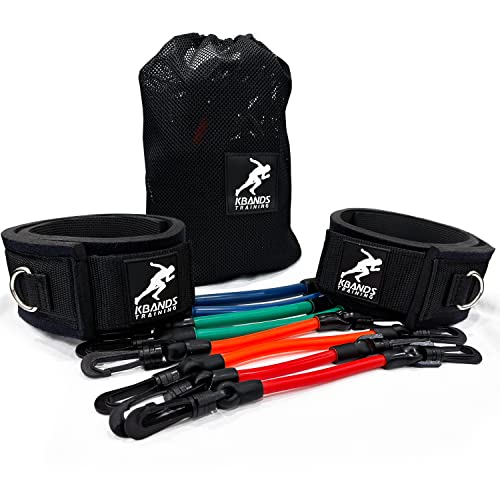
- Eight bands with multiple resistance levels
- Padded, non-slip thigh-band design
- Includes four digital training programs
Best For: Structured speed, agility, and hip-strength training
Best for Partner-Resisted Acceleration
YNXing Dynamic Resistance Trainer
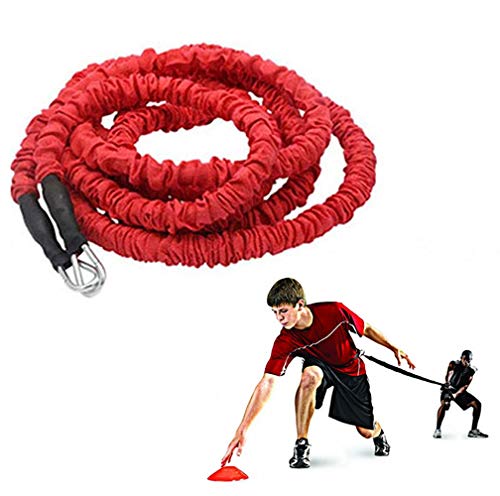
- Elastic cord supports resisted running drills
- Usable with a partner or stable anchor
- Designed for strength, power, and agility
Best For: Acceleration and explosive-power training
Best for Natural Running Motion
Kinetic Bands Leg Speed Resistance Bands

- Supports full range of motion while running
- Four progressive resistance levels
- Includes stretch strap and digital training series
Best For: Sprint-pattern and multidirectional athletic conditioning
Best All-Direction Pick
Pseudois Resistance Bungee Band

- 8-foot cord stretches to 20 feet
- 360° rotation belt supports multidirectional drills
- Includes door anchor for solo training
Best For: Multi-sport speed and agility sessions
Best Heavy-Resistance Option
Vikingstrength 360° Running Bungee Band

- Heavy tension support for demanding drills
- Adjustable padded Velcro waist system
- Includes V-Strength app access and storage bag
Best For: Heavy-resistance speed and agility training
Best Complete Training Set
80lb Speed Agility Resistance Band Set

- 8.2-foot band supports up to 80lb resistance
- Includes four cones and two handles
- Works for anchored solo or partner training
Best For: Complete speed, agility, and sprint-drill setups
Top Multi-Directional Pick – Kinetic Bands Acceleration Speed Cord
For athletes seeking resistance bands for sprint mechanics, the Kinetic Bands Acceleration Speed Cord combines a training belt, bungee cord, anchor strap, hand strap, and cones for acceleration and directional drills. Its 360-degree D-ring supports movement in multiple directions, while three belt sizes help accommodate different waist measurements.
Best For: Sprint, agility, and acceleration drills with solo or partner training.
Pros:
- Supports multidirectional resistance training through a 360-degree D-ring.
- Includes small, medium, and large belt options for different waist sizes.
- Comes with eight stackable agility cones for portable footwork drills.
- Can be used with an anchor or training partner.
Cons:
- Offers one resistance level rather than adjustable resistance levels.
- The belt and cord setup may be more equipment than needed for simple band exercises.
Choose this kit if you want a broader sprint-training setup instead of a standalone resistance band. The included cones and attachment options make it particularly useful for structured acceleration and agility sessions.
Best Heavy-Duty Option – SKLZ Recoil 360 Resistance Belt
The SKLZ Recoil 360 is a focused choice for resistance bands for sprint mechanics, using a sheathed flex cord and adjustable belt to provide dynamic resistance while you move. It stretches from 8 to 22 feet and provides 15 to 50 pounds of resistance for drills in nearly any direction.
Best For: Athletes who want heavy resistance for multidirectional speed and power work.
Pros:
- Provides a stated resistance range of 15 to 50 pounds.
- Extends from 8 to 22 feet for varied movement distances.
- Free-motion ring supports resistance at almost any angle.
- Can be used solo, with a coach, or with teammates.
Cons:
- Has one resistance level rather than multiple interchangeable levels.
- Does not include cones or additional training accessories.
- Listed with no warranty.
This is a practical pick when durability and stronger resistance matter more than a large accessory bundle. Its long stretch range and free-motion ring suit athletes practicing acceleration, power, and directional movement.
Best Adjustable Band Set – Elite Supplies Leg Resistance Bands
This 11-piece Elite Supplies set gives athletes a flexible way to use resistance bands for sprint mechanics, leg strengthening, and glute activation. Four band strengths, two leg straps, and a carry bag make it easier to vary training intensity and transport the setup.
Best For: Leg workouts, glute activation, and progressive resistance training.
Pros:
- Includes four resistance levels from 10 to 30 pounds.
- Supplies two leg straps for lower-body exercises.
- Contains multiple bands for adjusting workout intensity.
- Includes a mesh carry bag for storage and transport.
Cons:
- Does not include a waist belt, anchor, or cones for resisted sprint drills.
- The supplied details identify the set as light tension supported.
This set is better suited to accessory strength work than full-speed resisted running. It is a useful option if your sprint-mechanics routine also includes leg and glute exercises with adjustable band tension.
Best Portable Training Set – Explosive Training Resistance Kit
The Speed Training Equipment set is a portable option for athletes using resistance bands for sprint mechanics, with a waist-and-shoulder belt system, 360-degree D-ring, and resistance rope. The rope offers up to 50 pounds of resistance, stretches from 6.6 to 16.4 feet, and supports solo or partner drills.
Best For: Portable acceleration, agility, and multidirectional resistance training.
Pros:
- Provides up to 50 pounds of resistance for explosive drills.
- 360-degree D-ring supports movement in multiple directions.
- Can be used with an anchor or a training partner.
- Includes a carrying bag for indoor or outdoor use.
Cons:
- Offers one resistance level rather than a selectable range.
- The kit uses a shoulder belt in addition to a waist belt, which may not suit every athlete.
- Listed with a three-month warranty.
Consider this kit if portability and multidirectional movement are priorities. Its long stretch range and included bag make it convenient for field sessions, while the belt design provides a dedicated setup for resisted running drills.
Best Overall – Kbands Speed and Strength Leg Resistance Bands
For athletes comparing resistance bands for sprint mechanics, the Kbands system offers a leg-focused setup designed to build hip strength, explosiveness, speed, and agility. Its padded thigh bands, swivel-style rotational clip, multiple resistance levels, and included digital programs make it a versatile option for structured drills and strength work.
Best For: Athletes and coaches wanting a complete, adjustable leg-band system for speed, agility, and hip-strength training.
Pros:
- Includes eight resistance bands with multiple tension options for youth through advanced athletes.
- Padded thigh bands are designed not to roll or slip during movement.
- Includes Speed 101, Agility FX, Leg Toner, and 123 Reaction Pro digital training programs.
- Comes with a travel bag and a lifetime warranty on the resistance bands.
Cons:
- The large range of bands may be more equipment than beginners need.
- The product is primarily a leg-strap system, so it is less suited to upper-body resistance exercises.
With its broad resistance selection and training-library access, Kbands is a strong all-around choice for sprint drills, lateral movement, and lower-body strength work. Choose the appropriate band level and progress gradually as mechanics improve.
Best for Partner-Resisted Acceleration – YNXing Dynamic Resistance Trainer
The YNXing Dynamic Resistance Trainer takes a different approach to resistance bands for sprint mechanics, using an elastic cord to add resistance while running, jumping, and performing agility work. Its adjustable setup can be used with a partner or attached to a stable grounded object.
Best For: Runners and team-sport athletes who want resisted acceleration and explosive-power drills with partner or anchor support.
Pros:
- Designed to develop strength, power, agility, flexibility, and balance.
- Can be used for running, jumping, agility, and broader leg, core, back, chest, and shoulder exercises.
- The elastic cord can stretch up to three times its original length.
- Supports partner-assisted training or individual use with a stable grounded object.
Cons:
- The supplied version has one listed resistance level and a 50-pound tension specification.
- Effective individual use depends on access to a secure anchor point.
- A partner may be needed to create the intended challenge during some drills.
This trainer is best viewed as a resisted-running and power tool rather than a traditional set of loop bands. Its long cord and partner-or-anchor configuration suit athletes who have space and a reliable setup for acceleration work.
Best for Natural Running Motion – Kinetic Bands Leg Speed Resistance Bands
For resistance bands for sprint mechanics that prioritize a natural running motion, Kinetic Bands use separate front and rear bands to engage the legs from the knees to the lower abdomen without restricting movement. The system also includes an athletic stretch strap and digital training series for guided workouts.
Best For: Athletes aged 13 and over who want progressive resistance for acceleration, top-end speed, balance, and sport-specific conditioning.
Pros:
- Designed to provide resistance while maintaining full range of motion and natural running mechanics.
- Four resistance levels support progression from lighter to heavier training loads.
- Swivel clips help maintain mobility during multidirectional drills.
- Includes adjustable leg straps, stretch strap, travel bag, and digital training access.
Cons:
- The listed color configuration is intended for athletes ages 13 and over.
- It offers less resistance-level variety than versions that include the advanced black band.
Kinetic Bands are a practical fit when unrestricted movement is a priority. Their two-band layout and training resources make them useful for sprint-pattern drills, change-of-direction work, and broader athletic conditioning.
Best All-Direction Pick – Pseudois Resistance Bungee Band
For athletes comparing resistance bands for sprint mechanics, the Pseudois Resistance Bungee Band focuses on dynamic resistance during sprints, shuffles, jumps, and backpedals. Its 8-foot nylon cord stretches to 20 feet, while the padded waist belt and 360° rotation ring support movement in multiple directions.
Best For: Multi-sport speed and agility training, including partner drills and solo workouts with the included door anchor.
Pros:
- Supports forward, lateral, backward, and vertical movement.
- 8-foot cord stretches to 20 feet for dynamic resistance.
- Includes a padded adjustable belt, door anchor, and travel-friendly design.
- Reinforced webbing, double stitching, and heavy-duty snap clips support regular use.
Cons:
- Offers one medium resistance level.
- Partner assistance may be needed for some sprint drills; the door anchor is intended for solo resistance training.
This is a versatile choice when sprint-mechanics work includes changes of direction rather than only straight-line running. The 360° rotation feature and included anchor make it adaptable across field, court, gym, and home sessions.
Best Heavy-Resistance Option – Vikingstrength 360° Running Bungee Band
For resistance bands for sprint mechanics with a heavier training feel, the Vikingstrength 360° Running Training Bungee Band uses an adjustable, padded waist system and heavy tension support. The design is intended for speed, acceleration, and agility work while allowing unrestricted movement.
Best For: Athletes seeking heavy resistance for running, football, basketball, and partner-based speed training.
Pros:
- Listed with heavy tension support for demanding workouts.
- Adjustable Velcro fastening and plush padding prioritize fit and comfort.
- Reinforced stitching and anti-snap construction are suited to regular training.
- Includes access to the V-Strength workout app and a storage bag.
Cons:
- Only one resistance level is listed.
- The supplied details do not specify cord length or a door anchor.
This model stands out for users who want a padded waist band and heavy resistance rather than a broad accessory package. The included app may also help structure workouts and track progress.
Best Complete Training Set – 80lb Speed Agility Resistance Band Set
This 80lb set is a practical option for athletes looking for resistance bands for sprint mechanics plus equipment for setup and movement drills. It combines a natural-rubber resistance band, adjustable waist belt, handles, fix strap, and four cones for individual or partner training.
Best For: Athletes who want a ready-to-use speed and agility kit for sprinting, quick stops, and multi-sport workouts.
Pros:
- Includes an 8.2-foot band with up to 80lb resistance.
- Supports both anchored solo sessions and partner resistance races.
- Four cones add options for agility and quick-stop drills.
- Package includes two handles, an adjustable belt, fix strap, and portable bag.
Cons:
- Heavy resistance may be more than beginners need for technique-focused work.
- The set has a three-month warranty.
- Its listed resistance setup does not indicate multiple resistance levels.
Choose this kit if versatility and included accessories matter as much as the band itself. The cones and dual solo-or-partner setup make it particularly useful for organized field sessions and varied agility routines.
How We Picked the Best Resistance Bands for Sprint Mechanics
We focused on the features that matter most during resisted sprint and agility work: secure attachment, comfortable belts or leg straps, useful resistance levels, elastic range of motion, and versatility across drills. The selection includes systems for acceleration training, lateral movement, explosive starts, football and basketball conditioning, and general lower-body power.
Because resistance-band systems vary widely, we also considered whether each design is better suited to solo practice, partner-assisted drills, or structured athletic programs. Digital training content can be helpful, but it should support—not replace—sound sprint technique and progressive coaching.
Quick Comparison
| System type | Best suited to | What to check |
|---|---|---|
| Waist-belt bungee | Resisted acceleration and running | Belt fit, anchor method, cord length |
| Leg resistance bands | Knee drive, hip strength, and mechanics drills | Strap comfort, sizing, resistance range |
| Multi-piece kits | Teams and varied training sessions | Included attachments and storage |
| Heavy resistance sets | Power, strength, and advanced conditioning | Progression options and form control |
Key Buying Factors for Resistance Bands for Sprint Mechanics
Resistance and Progression
Choose a system that lets you increase load gradually. Excessive resistance can shorten the stride, distort posture, and teach mechanics that do not transfer well to unresisted sprinting. Beginners generally benefit from lighter tension, while experienced athletes may want multiple cords or levels for acceleration and strength work.
Attachment and Movement Freedom
A waist belt should stay secure without digging into the hips or restricting arm action. Leg bands should sit firmly without rolling, pinching, or slipping during high-knee drills. Check whether the kit requires a partner, fixed anchor, or open training space.
Durability and Safety
Inspect cords, clips, seams, and handles before each session. Protective sleeves and reinforced connection points are valuable when bands are stretched repeatedly. Leave adequate clearance behind the athlete, and never use a damaged band or exceed its intended stretch.
Portability and Training Support
Compact systems work well for field sessions, travel, and team warmups. If a kit includes a training program, look for clear progressions and drills that match your sport rather than choosing based on bonus content alone.
Who Should Buy Which Resistance Bands for Sprint Mechanics?
Sprinters and field-sport athletes: Choose a belt-based bungee with adjustable or progressive resistance for starts, acceleration, and resisted running.
Players working on mechanics: Leg-focused bands are useful for knee drive, hip activation, and controlled technique drills when used with light-to-moderate tension.
Coaches and teams: A multi-piece kit offers more ways to accommodate different athletes, drills, and resistance preferences.
Advanced strength and power trainees: Look for several resistance levels and sturdy attachments so training can progress without forcing poor sprint form. Whatever you buy, begin with controlled repetitions, prioritize posture and foot placement, and remove resistance when fatigue starts changing mechanics.